高端精密零部件制造正加速迈向多品种、小批量、定制化时代。AI 算力硬件、具身机器人等新兴赛道,对零部件的加工精度、运行稳定性与产线柔性提出严苛要求——GPU 液冷冷板、散热均热板、服务器支撑框架、机器人关节壳体与本体骨架等核心构件,皆赖精密加工支撑。传统人工值守产线受困于换产耗时长、人工依赖高、精度一致性难控、产能弹性不足等瓶颈,难以承接定制化与规模化的双重需求。
针对这一痛点,利元亨推出 CNC 加工自动生产线解决方案,覆盖既有产线自动化升级与新建产线整体交付,以“硬件自动执行、软件智能调度”重塑加工范式,用“系统跑产线”替代“人盯产线”,助力企业实现少人化、柔性换产与人效提升,为上述场景提供可复制的柔性智造升级路径。

针对换产频繁、物料依赖人工等痛点,产线以 CNC 加工中心为核心,集成自动上下料机构、龙门机械手与双层倍速链输送线,搭载多型号 AMR 移动机器人,贯通毛坯上线至成品下线的全自动物料链;依托接驳缓存线实现工装料盘自动分拣与有序仓储,形成“加工—物流—仓储”一体化闭环,适配油污、粉尘等复杂工况。装夹兼容虎钳、零点夹具等形式,支持拼盘、组盘混线生产,可长期稳定承接非标零件加工。
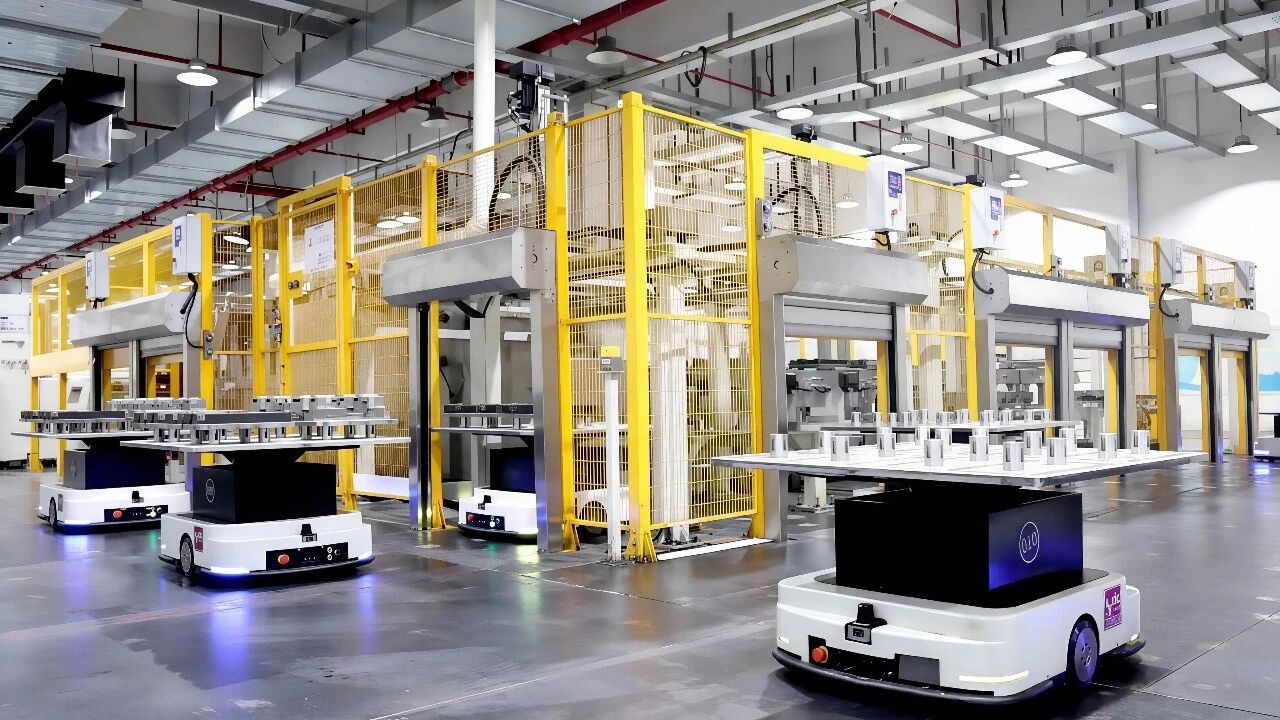
核心加工环节,精度可达±0.01mm,最大加工零件尺寸覆盖 350mm×350mm×200mm,工艺参数全程统一管控,从源头规避人工操作的质量波动。依托自动化硬件,产线 24 小时连续运转,整线日产能达 2200 盘;单零件整流程由传统 93.4 分钟压缩至 84.8 分钟,加工周期缩短约 9%,并精简 5 道人工工序,以更高精度、更短周期、更稳交付,精准匹配高端领域制造要求。

针对排程依赖人工、设备等待、插单响应慢等痛点,产线以自研智能调度系统为“决策大脑”:向上打通 ERP 与 MES,向下直连机床、机械手与 AGV,实现订单接入、程序自动编码、任务派发至物料匹配的全流程在线协同。系统内置设备负荷均衡、交期紧迫优先、最小化生产周期等算法,可依订单优先级动态优化排程;遭遇设备故障或紧急插单,即刻自动重调度、改派可用机台,最大限度压缩停机等待、提升机床利用水平。
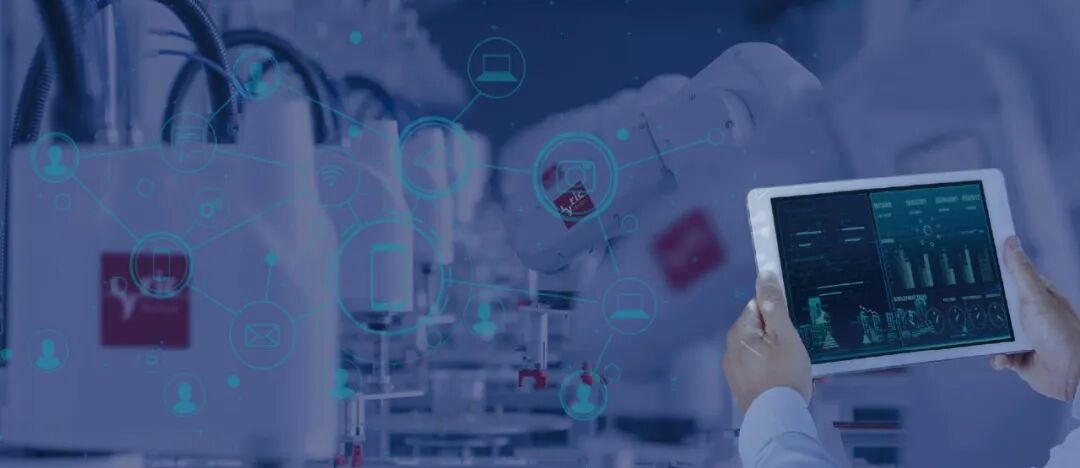
在此基础上,机外装夹、自动分中打表、在线尺寸检测、程序与对刀信息自动上传等环节均由系统闭环执行,生产全过程数据在线留痕,订单、程序、设备、工件一一对应、全程可追溯,既省去人工记录与对账之繁,也为企业沉淀结构化数据、夯实数据治理底座。

对照同等产能的传统两班制产线,方案形成价值闭环:
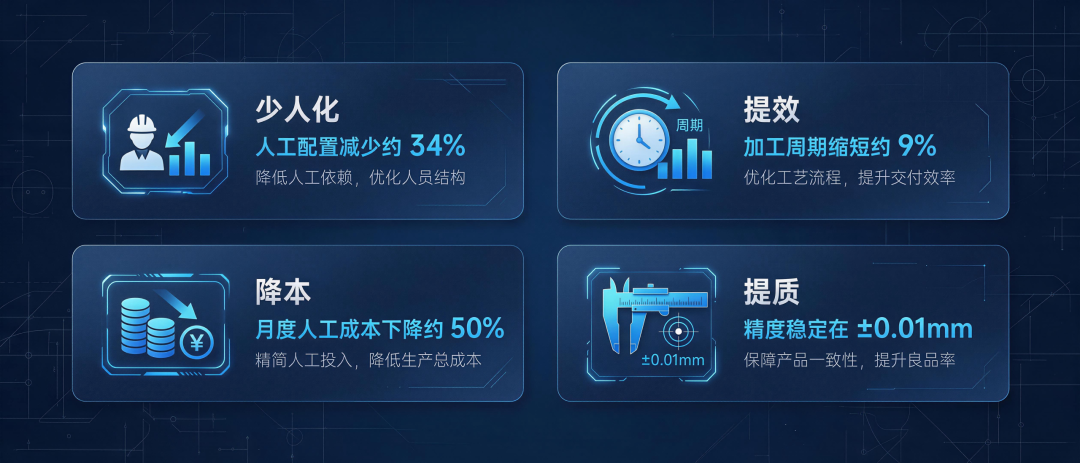
少人化方面,同产能下跟线技术工由 61 人减至 10 人,叠加 30 名普工后,整体用工由 61 人降至 40 人,减少约 34%,夜班无人值守;提效方面,加工周期缩短约 9%,机床统一调度,空转等待显著减少;降本方面,月度人工成本较传统模式下降约 50%,单件加工成本有效压降;提质方面,精度稳定于±0.01mm,自动检测替代人工判断,批量一致性与质量可控性稳步提升。
智能制造是高端制造转型升级的核心方向。利元亨 CNC 加工自动生产线以硬件筑牢精度与产能之基,以软件贯通数据与调度之脑,持续为 AI 算力、具身机器人及高端装备、新能源、3C 等领域提供可落地、可复制的 CNC 加工自动生产线方案,助推国内高端制造业高质量发展。
From "Manually Monitoring Production Lines" to "System-Driven Production Lines": Lyric’s Automatic CNC Machining Production Line Enables Low-Labor Precision Manufacturing and Flexible Changeover
High-end precision component manufacturing is rapidly shifting toward an era of multi-variety, small-batch and customized production. Emerging sectors such as AI computing hardware and embodied robotics impose stringent requirements on component machining accuracy, operational stability and production line flexibility. Core parts including GPU liquid cold plates, heat spreaders, server support frames, robot joint housings and body frames all rely on precision machining. Traditional manually attended production lines are constrained by bottlenecks: lengthy changeover time, heavy reliance on labor, inconsistent precision and insufficient capacity elasticity. They struggle to meet both customized and scaled production demands simultaneously.
To address this pain point, Lyric has launched a CNC machining automated production line solution, covering both automation upgrades of existing production lines and delivery of new production lines. By reshaping the machining paradigm with "automatic execution by hardware and intelligent scheduling by software," it replaces " manually monitoring production lines " with "systems running the line," helping enterprises achieve reduced manpower, flexible changeover, and improved labor productivity, and providing a replicable upgrade path for flexible intelligent manufacturing in the above scenarios.
I. Hardware as the Foundation: Fully Automated Loading/Unloading, Logistics, and Storage
To address pain points such as frequent changeovers and material handling that relies on manual labor, the production line is centered on CNC machining centers and integrates automatic loading/unloading mechanisms, gantry robots, and a double-layer speed-chain conveyor line. It is equipped with multiple models of AMR mobile robots to connect the fully automated material chain from blank loading to finished-product unloading. Relying on a transfer buffer line, it enables automatic sorting and orderly storage of fixture pallets, forming an integrated closed loop of "machining—logistics—storage" and adapting to complex working conditions such as oil contamination and dust. Clamping is compatible with vises, zero-point fixtures, and other forms, and supports mixed-line production with combined and grouped pallets, enabling long-term stable machining of non-standard parts.
In the core machining stage, the accuracy can reach ±0.01 mm, and the maximum part size covered is 350 mm × 350 mm × 200 mm. Process parameters are uniformly controlled throughout the entire process, eliminating quality fluctuations caused by manual operations at the source. Supported by automated hardware, the production line operates continuously 24 hours a day, with a daily capacity of 2,200 pallets for the entire line. The complete process for a single part has been reduced from the traditional 93.4 minutes to 84.8 minutes, shortening the machining cycle by approximately 9% and eliminating 5 manual processes. With higher precision, shorter cycles, and more stable delivery, it precisely meets the manufacturing requirements of high-end fields.
II. Software Empowerment: Scheduling, Programming, and Data All Online
To address pain points such as manual-dependent scheduling, equipment waiting, and slow response to rush orders, the production line uses a self-developed intelligent scheduling system as its "decision-making brain": it connects upward to ERP and MES, and downward directly to machine tools, robots, and AGVs, enabling full-process online collaboration from order intake and automatic program coding to task dispatch and material matching. The system incorporates algorithms such as equipment load balancing, due-date urgency priority, and production cycle minimization, and can dynamically optimize scheduling based on order priorities. In the event of equipment failure or urgent order insertion, it immediately performs automatic rescheduling and reassigns tasks to available machines, minimizing downtime and waiting to the greatest extent and improving machine tool utilization.
On this basis, off-machine clamping, automatic centering and dial indicator alignment, in-line dimensional inspection, and automatic upload of programs and tool-setting information are all executed in a closed loop by the system. Data from the entire production process is recorded online for traceability, with one-to-one correspondence among orders, programs, equipment, and workpieces throughout the entire process. This not only eliminates the burden of manual recording and reconciliation, but also helps enterprises accumulate structured data and solidify the foundation for data governance.
III. Value Closed Loop: Fewer People, Higher Efficiency, Lower Cost, Better Quality
Compared with a traditional two-shift production line of equivalent capacity, the solution forms a value closed loop. In terms of reduced manpower, for the same capacity, the number of line-following skilled workers has been reduced from 61 to 10; adding 30 general workers, the overall headcount drops from 61 to 40, a reduction of about 34%, with unattended night shifts. In terms of efficiency improvement, the machining cycle is shortened by about 9%, machine tools are uniformly scheduled, and idle waiting is significantly reduced. In terms of cost reduction, monthly labor costs are about 50% lower than in the traditional model, and the per-piece machining cost is effectively reduced. In terms of quality improvement, precision is stabilized at ±0.01 mm, automatic inspection replaces manual judgment, and batch consistency and quality controllability are steadily improved.
Intelligent manufacturing is the core direction for the transformation and upgrading of high-end manufacturing. Lyric''s CNC machining automated production line builds a solid foundation for precision and capacity through hardware, and connects data and scheduling as its brain through software. It continues to provide implementable and replicable CNC machining automated production line solutions for fields such as AI computing power, embodied robots and high-end equipment, new energy, and 3C, helping to drive the high-quality development of domestic high-end manufacturing.